Built for the way your line actually runs.
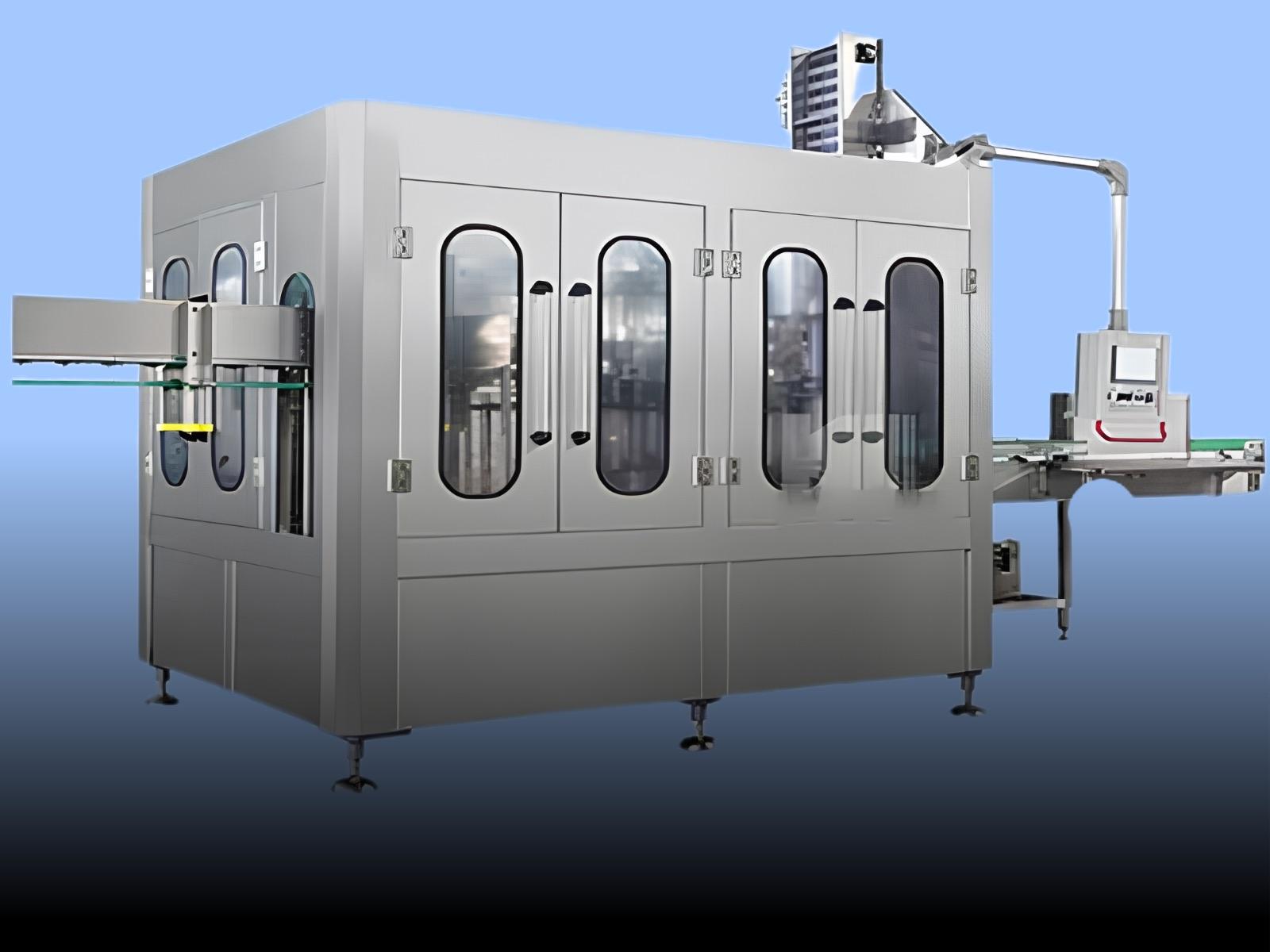
Two-stage piston homogenisers up to 300 bar for juice, nectar, pulp, dairy beverages and emulsions, with tungsten carbide valve seats and sanitary design.
When a nectar or pulpy juice separates into a clear top layer and a settled bottom layer within days of packing, the cause is almost always inadequate homogenisation. High-pressure homogenisation forces product through a narrow valve gap at up to 300 bar, shearing suspended particles down to a size where Brownian motion keeps them in suspension against gravity. A second-stage valve breaks up the clusters the first stage creates. The result is a product that stays uniform through shelf life, with a fuller mouthfeel and better colour.
Who this configuration suits.
Get a detailed quote for the Homogeniser.
Layout drawing, utility schedule, BIS / FSSAI checklist, itemised quotation in 24 hours.
Everything we ship with this plant.
Standard turnkey scope. Optional add-ons quoted on request.
Specs at a glance.
| Capacity | 300 – 10,000 litres/hour |
| Pressure | Up to 300 bar, two-stage |
| Valve material | Tungsten carbide / stellite |
| Wetted parts | SS-316L |
| Piston | Ceramic with water-flushed seals |
| Particle reduction | Typically to < 2 micron |
| Position | Before or after pasteurisation, product dependent |
Price on Request.
Every plant is quoted against your capacity, feedwater analysis, plot and product mix. Send us those and you get an itemised proposal within 24 hours.
Output, degree of automation and whether you need redundancy on critical stations.
A high-TDS, iron-heavy or seasonal input changes the treatment train and its cost materially.
Machinery only, or turnkey with civil drawings, utilities, commissioning and BIS / FSSAI documentation.
Number of SKUs, bottle sizes and how fast you need to switch between them.
Common questions.
Do I need a homogeniser for clear juice?+
No. Clear, filtered juices have nothing in suspension to stabilise. Homogenisation matters for nectars, pulpy juices, dairy beverages and anything with visible particulate or fat content.
Before or after pasteurisation?+
Usually immediately before, so the homogenised product goes straight into the heat step and any microbial load introduced by the homogeniser is killed. For some heat-sensitive products aseptic downstream homogenisation is used instead.