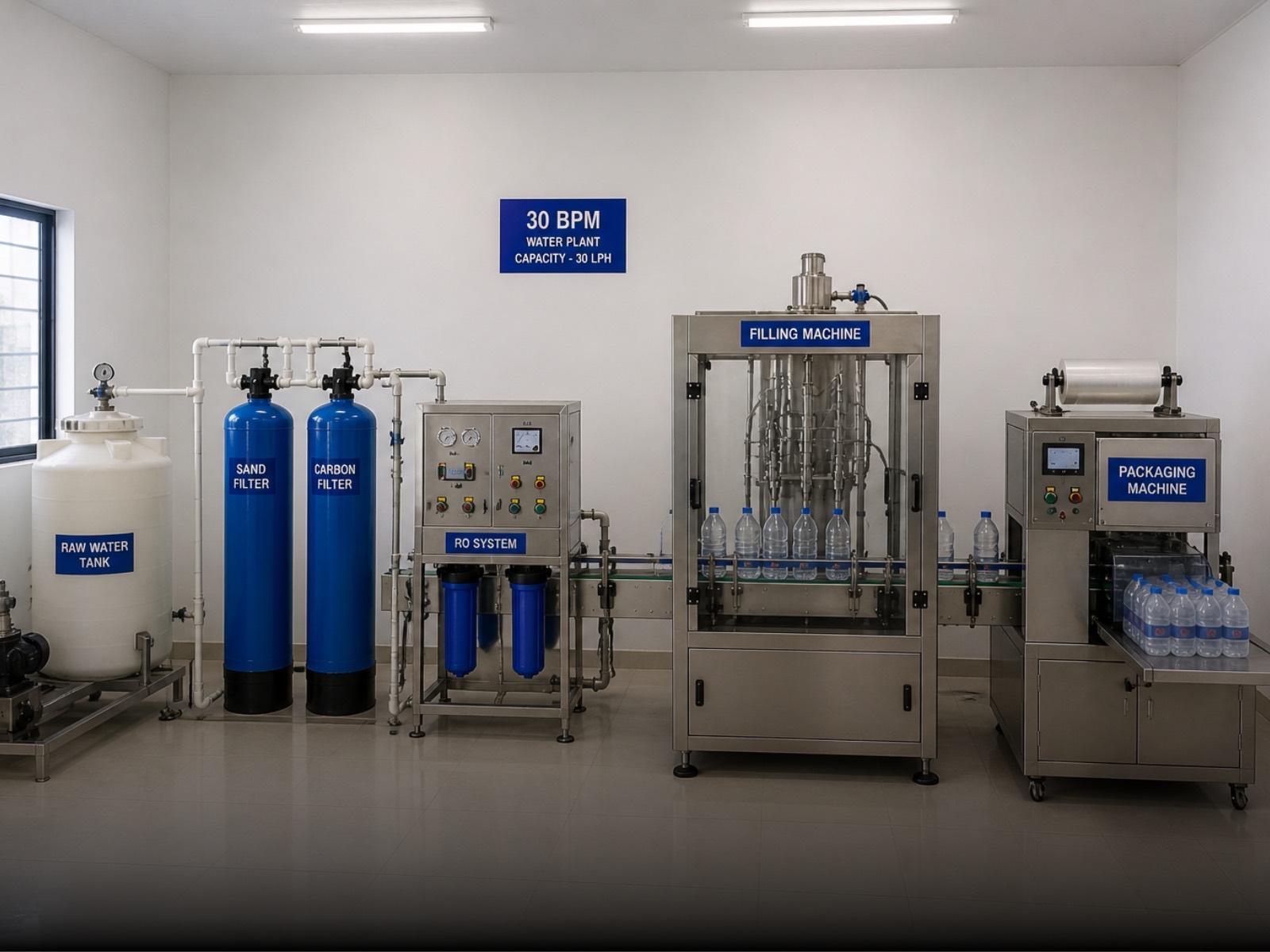
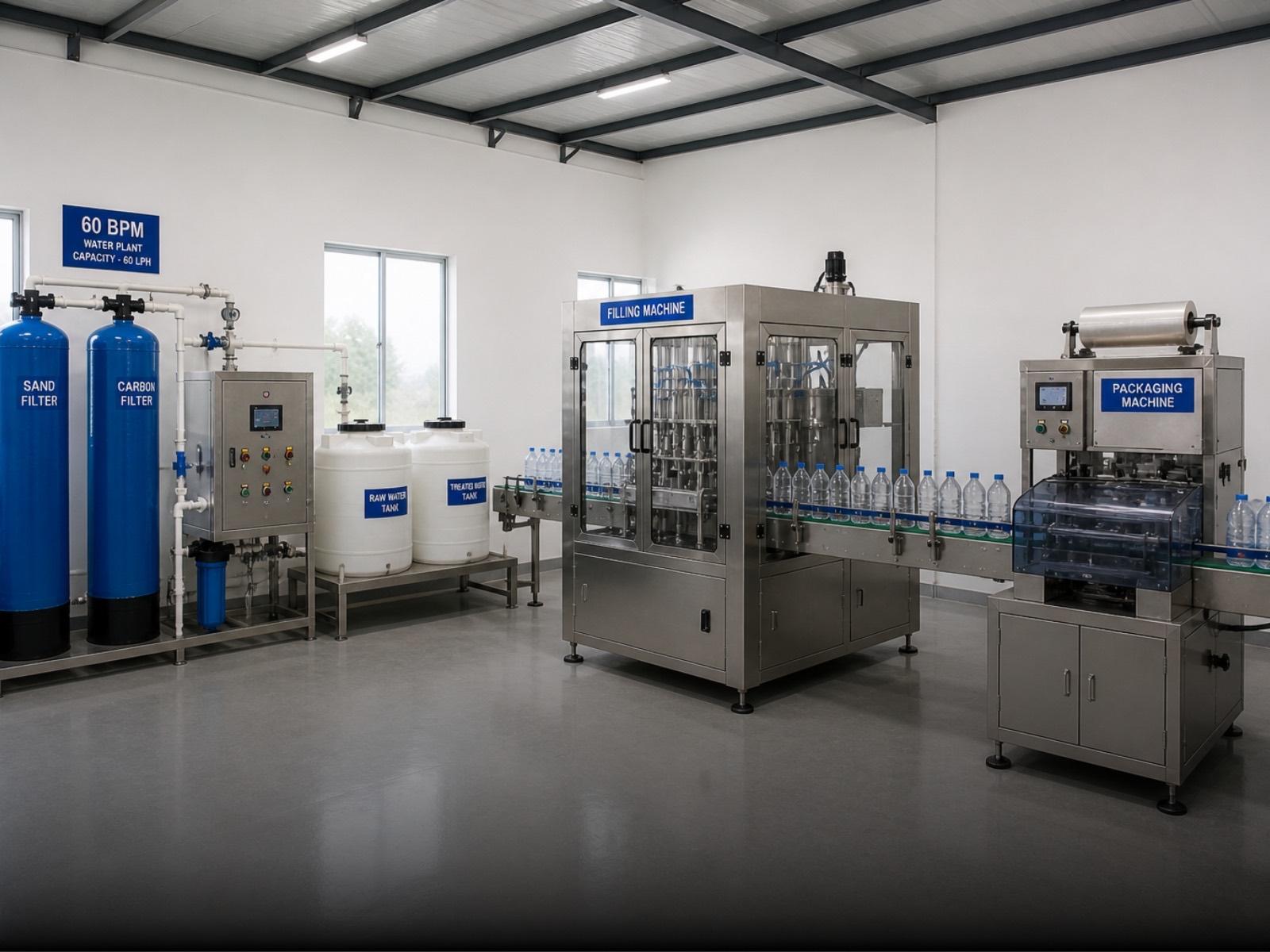
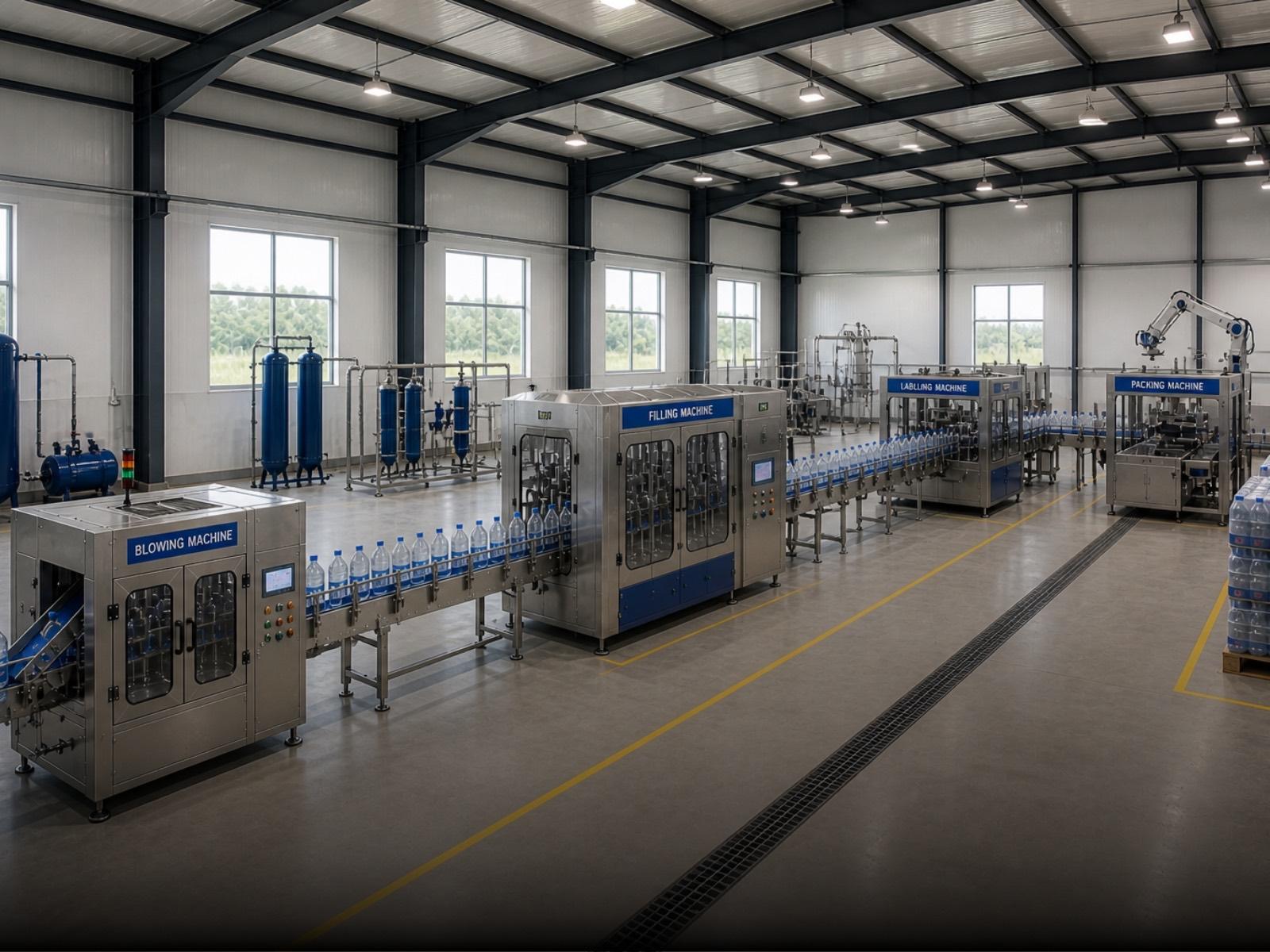
Built for the way your line actually runs.
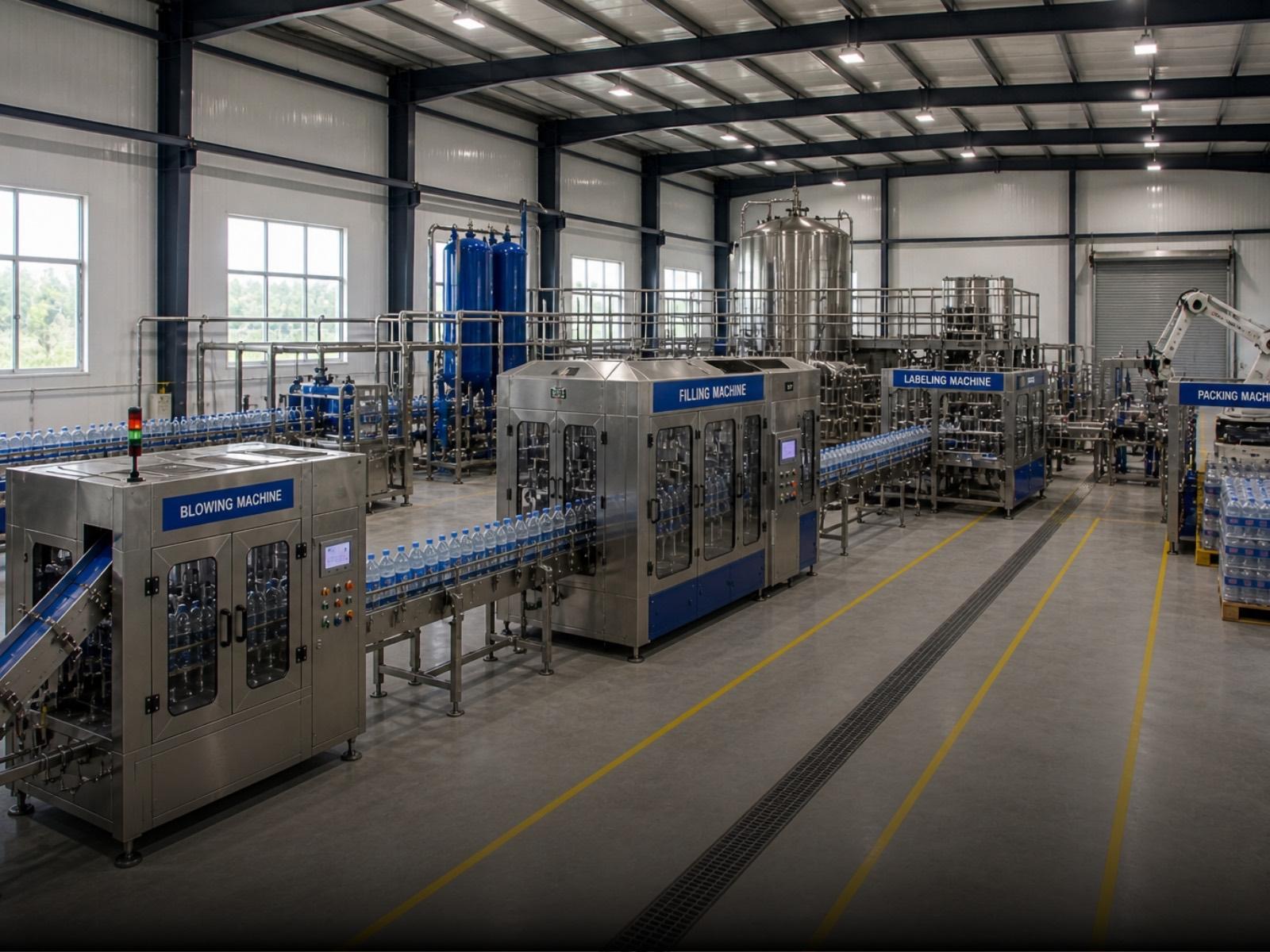
A 240 BPM (14400 BPH) flagship plant for national brands and dedicated co-packing operations. Engineered with redundant utilities and zero-downtime architecture.
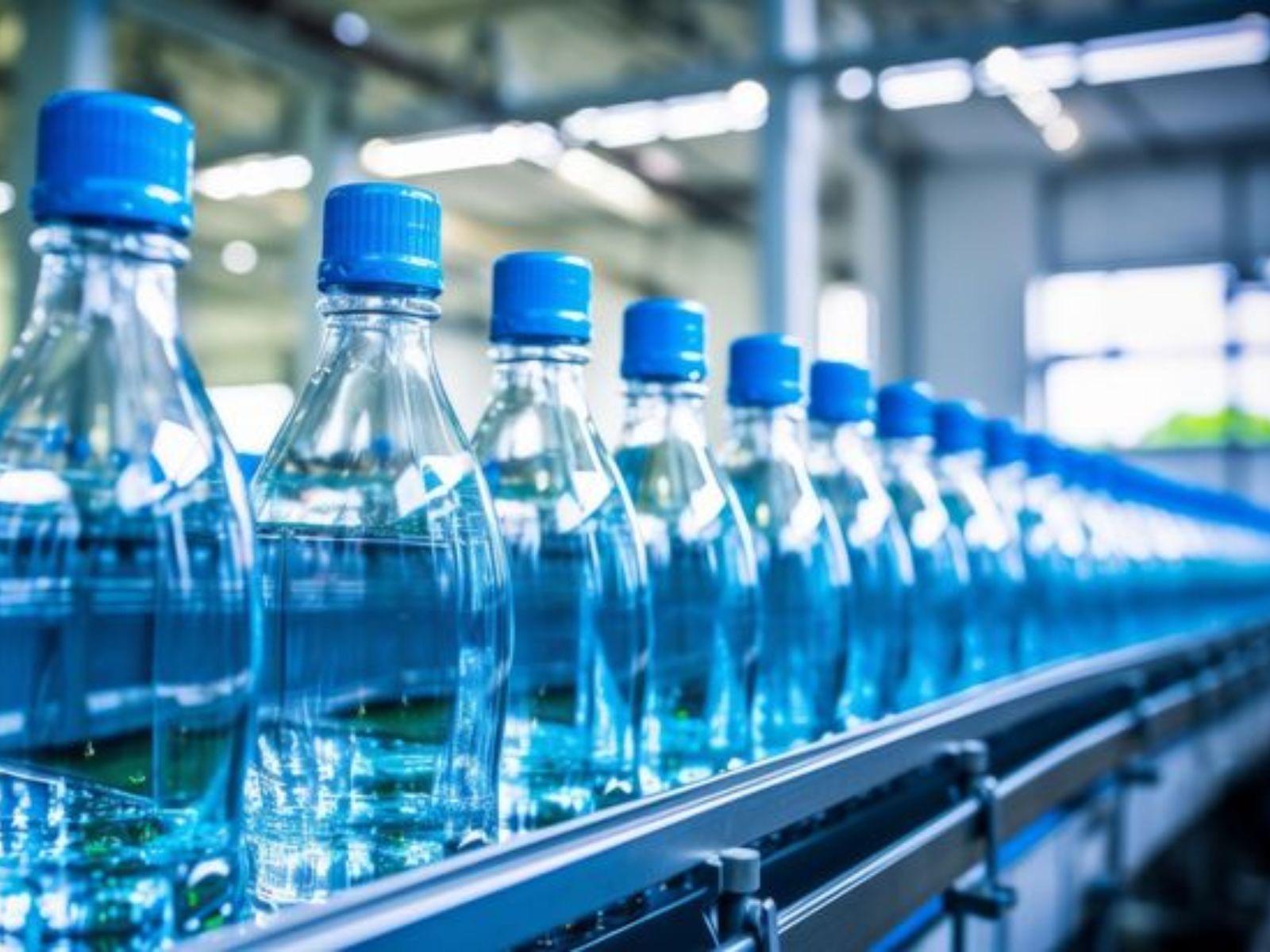
The 240 BPM line uses a high-speed 60-15-15 rotary monoblock with magnetic flow filling, servo capping, and twin labeling stations. Redundant RO trains, dual ozone generators, and automated change-over keep uptime above 96%.
Who this configuration suits.
Get a detailed quote for the 240 BPM Plant.
Layout drawing, utility schedule, BIS / FSSAI checklist, itemised quotation in 24 hours.
Everything we ship with this plant.
Standard turnkey scope. Optional add-ons quoted on request.
Specs at a glance.
| Output | 240 BPM (14400 BPH) |
| Bottle sizes | 200ml to 2L (with quick changeover) |
| Filling type | Magnetic / mass-flow servo |
| Power load | 180–220 kW |
| Water requirement | 15000 LPH raw water |
| Recovery | 85–90% |
| Footprint | 15000–20000 sq.ft. |
| Manpower | 14–18 per shift |
Price on Request.
Every plant is quoted against your capacity, feedwater analysis, plot and product mix. Send us those and you get an itemised proposal within 24 hours.
Output, degree of automation and whether you need redundancy on critical stations.
A high-TDS, iron-heavy or seasonal input changes the treatment train and its cost materially.
Machinery only, or turnkey with civil drawings, utilities, commissioning and BIS / FSSAI documentation.
Number of SKUs, bottle sizes and how fast you need to switch between them.
Common questions.
How many bottles per day can a 240 BPM plant produce?+
At 92% efficiency on a 22-hour operation, expect ~290,000 bottles/day. With a third shift maintenance window, the plant comfortably crosses 1 crore bottles/month.
Industry terms used here.
BPM is the standard rating unit for filling and bottling machines, the number of bottles the machine can fill per minute.
A composite metric measuring availability × performance × quality of a manufacturing line. Industry benchmark: 75-85%.
An automated cleaning protocol where cleaning solutions are circulated through process equipment without disassembly.
International food-safety management standards combining HACCP principles with management-system requirements, required for most beverage exports.